Introduction
Every day, millions of people around the world smoke cigarettes. While the health effects of smoking are widely discussed, one critical issue remains largely ignored what happens to the cigarette butt after it is discarded?
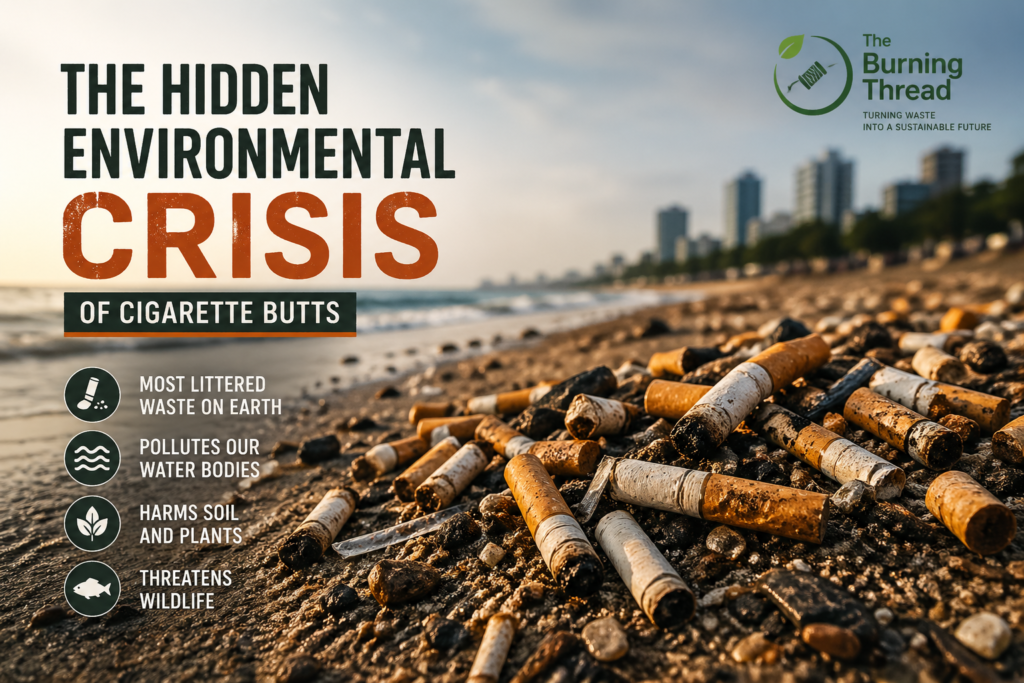
Cigarette butts are not just small pieces of waste. They are, in fact, one of the most dangerous and widespread forms of pollution globally.
The Scale of the Problem
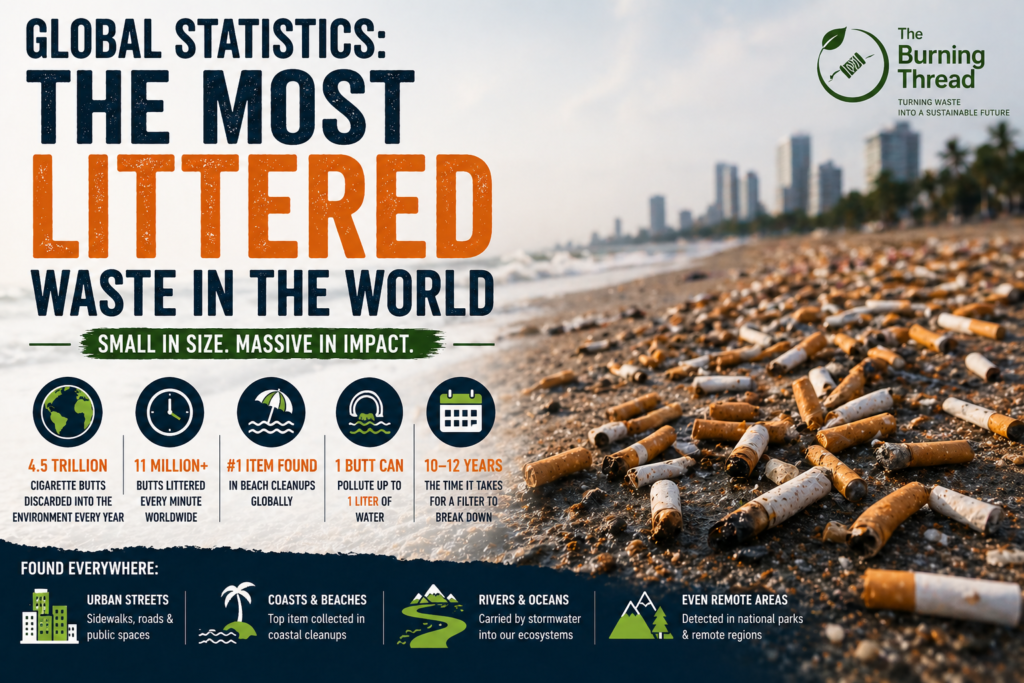
It is estimated that over 4.5 trillion cigarette butts are discarded into the environment every year. This makes them the most littered item on Earth.
Unlike larger waste, cigarette butts are often overlooked because of their size. However, their sheer volume makes them a massive environmental threat.
They are commonly found in:
- Roads and sidewalks
- Beaches and oceans
- Soil and agricultural land
- Drainage systems
What Are Cigarette Butts Made Of?
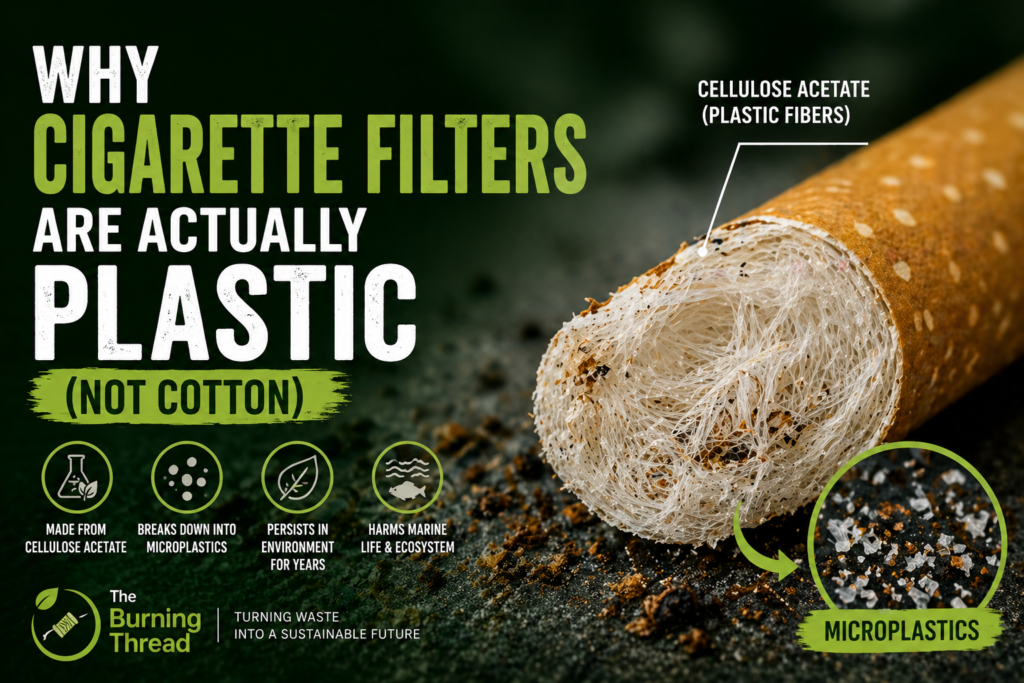
Many people assume cigarette filters are made of cotton. This is incorrect.
Cigarette filters are primarily composed of cellulose acetate, a type of plastic. This material:
- Does not biodegrade easily
- Can persist in the environment for years
- Breaks down into microplastics
In addition to plastic, cigarette butts contain:
- Nicotine residues
- Tar
- Heavy metals such as lead and cadmium
- Toxic chemicals absorbed during smoking
Environmental Impact
When cigarette butts are discarded, they begin releasing toxic substances into the environment.
1. Water Pollution
Rainwater carries cigarette waste into rivers and oceans. The chemicals leach into water bodies, affecting aquatic life.
2. Soil Contamination
Toxins from cigarette filters reduce soil fertility and can harm plant growth.
3. Threat to Wildlife
Animals and marine organisms often mistake cigarette butts for food, leading to ingestion and poisoning.
4. Microplastic Formation
Over time, filters break down into microplastics, contributing to long-term environmental damage.
Why Current Waste Systems Fail
Traditional waste management systems are not designed to handle cigarette butts effectively.
Reasons include:
- Their small size makes collection difficult
- Lack of segregation at the source
- Absence of dedicated recycling infrastructure
- Public unawareness
As a result, most cigarette waste ends up in open environments instead of being properly processed.
A Problem Hiding in Plain Sight
One of the most concerning aspects of cigarette butt pollution is its invisibility.
Because each piece is small, people underestimate its impact. However, when combined, cigarette butts form a massive environmental burden that rivals plastic pollution.
The Need for Innovation
Addressing this issue requires more than awareness. It demands:
- Scientific recycling methods
- Scalable waste collection systems
- Public participation
- Sustainable product development
This is where initiatives like The Burning Thread aim to intervene — by transforming cigarette waste into usable, eco-friendly materials and closing the loop in the waste cycle.
Conclusion
Cigarette butts may appear insignificant, but their environmental impact is anything but small. They represent a global crisis that has been largely ignored for decades.
Understanding the scale and severity of this issue is the first step toward meaningful change.
The next step is action.