Introduction
When discussing global pollution, most people think of plastic bottles, bags, or industrial waste.
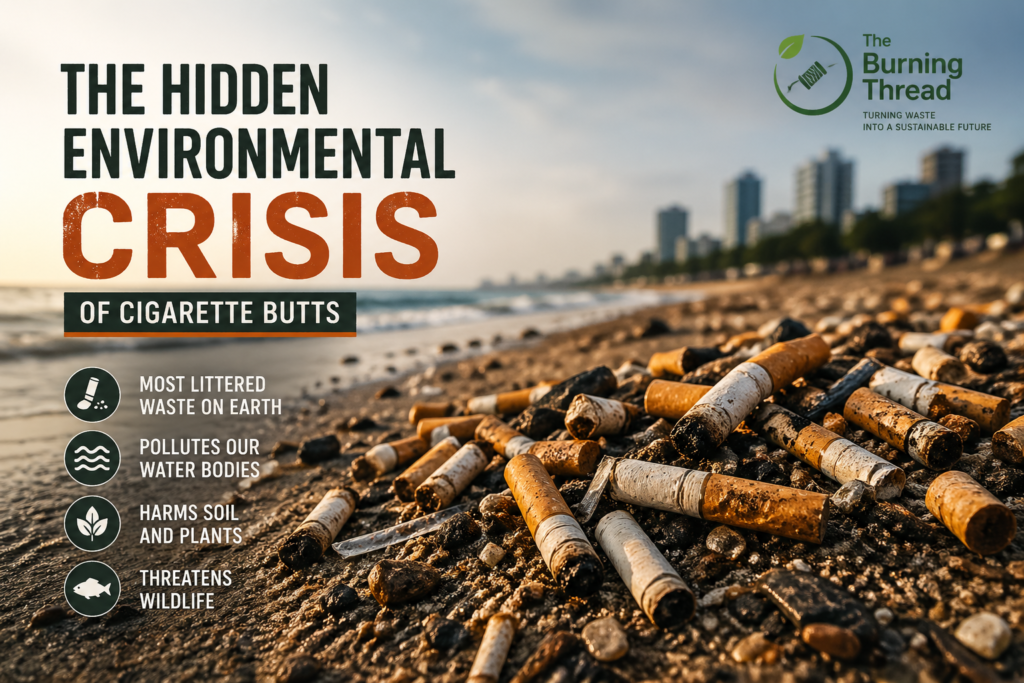
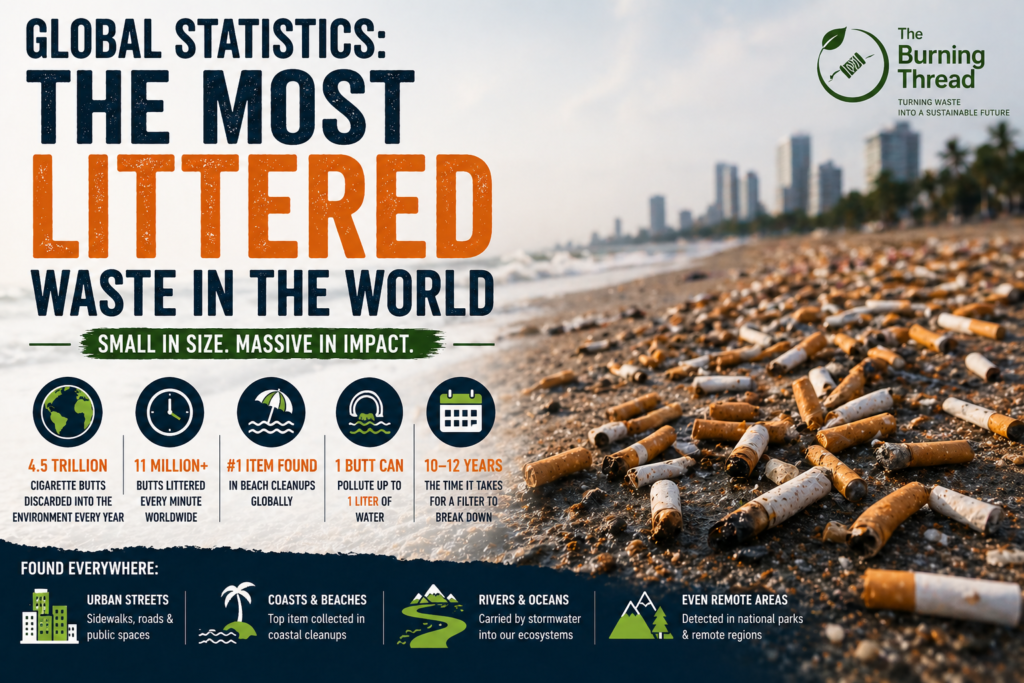
However, data consistently shows that cigarette butts are the most littered waste item in the world.
Despite their small size, their volume and distribution make them a dominant contributor to environmental pollution.

Global Cigarette Consumption
Trillion Cigarettes / Year
The Numbers Behind the Problem
Globally, an estimated 5.6 trillion cigarettes are consumed every year.
Out of these, approximately 4.5 trillion cigarette butts are discarded into the environment.
This translates to:
- Millions of butts discarded every minute
- Billions entering ecosystems annually
- Continuous accumulation in urban and natural environments
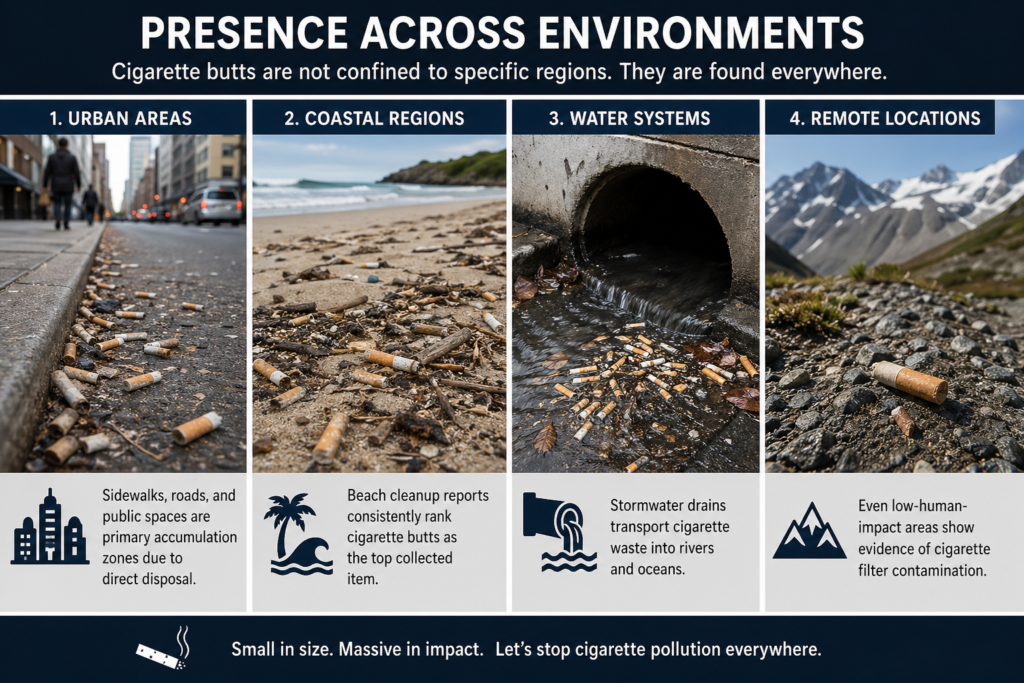
No other single waste item reaches this level of consistent global dispersion.
Why Cigarette Butts Dominate Waste Statistics
Several factors contribute to their dominance:
- High consumption frequency
- Single-use nature
- Improper disposal habits
- Lack of accountability mechanisms
- Absence of dedicated recycling systems
Unlike other waste types, cigarette butts are rarely disposed of responsibly.

Economic and Cleanup Burden
Governments and municipalities spend significant resources managing cigarette waste.
Costs include:
- Street cleaning operations
- Beach and coastal cleanups
- Waste transportation and disposal
- Environmental restoration efforts
Despite these efforts, the rate of accumulation often exceeds cleanup capacity.
The Data Gap Problem
One challenge in addressing cigarette butt pollution is underreporting.
Because they are small and scattered:
- They are often excluded from waste audits
- Their impact is underestimated in policy frameworks
- Public awareness remains limited
This creates a gap between actual impact and perceived importance.
Implications for Sustainability
From a sustainability standpoint, cigarette butts represent:
- A failure in product lifecycle design
- A gap in waste management systems
- An opportunity for circular innovation
If even a fraction of this waste stream is recovered and reused, the environmental benefit would be substantial.
Moving From Data to Action
Statistics alone do not solve problems, but they define urgency.
The scale of cigarette butt pollution makes it clear that:
- Passive awareness is insufficient
- Active recovery and recycling systems are required
- Innovation must operate at scale
This is the operational space where initiatives like The Burning Thread are positioned—converting a globally abundant waste stream into usable materials.
Conclusion
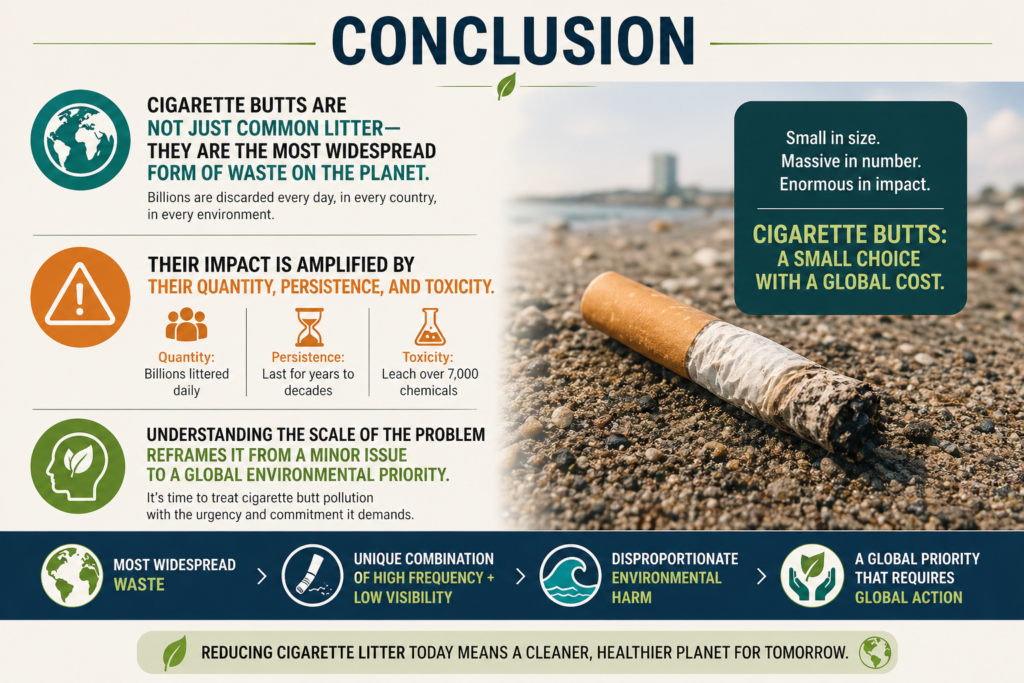
Understanding the scale of the problem reframes it from a minor issue to a global environmental priority.