
Introduction
Cigarette butts are often dismissed as harmless litter. Their small size and widespread presence make them easy to ignore.
However, from a scientific perspective, cigarette butts are concentrated toxic waste units. Each discarded filter carries a complex mixture of hazardous chemicals that can significantly impact ecosystems.
Understanding their toxicity requires examining what they contain and how these substances interact with the environment.
Chemical Composition of Cigarette Butts
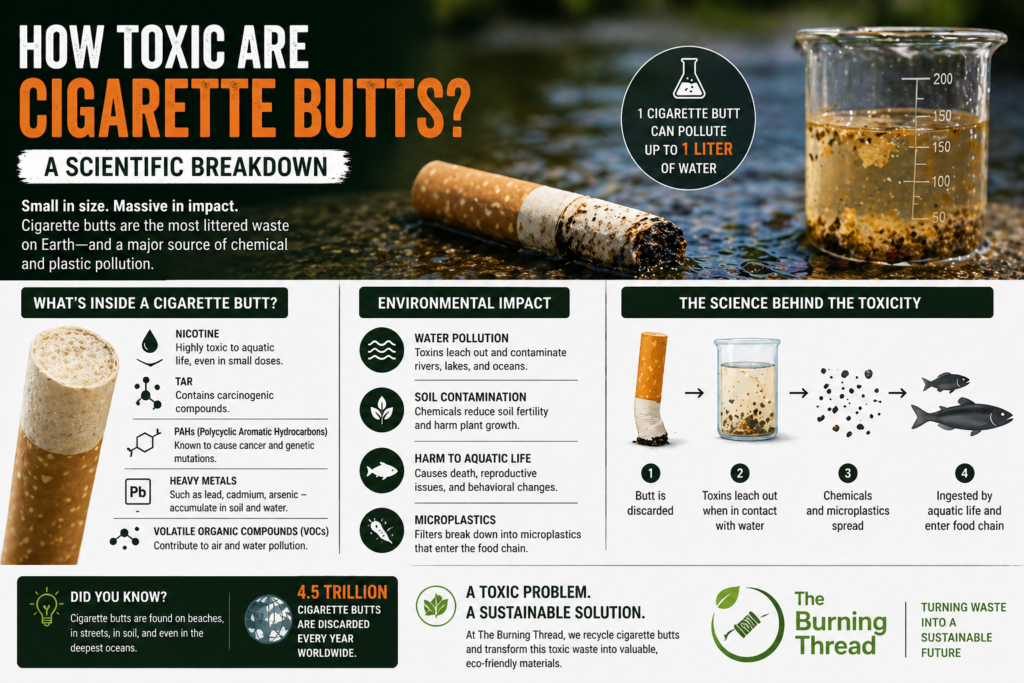
A used cigarette filter is not just plastic. It acts as a chemical reservoir, trapping substances produced during combustion.
Key components include:
- Nicotine – a highly toxic alkaloid
- Tar – a mixture of carcinogenic compounds
- Polycyclic Aromatic Hydrocarbons (PAHs)
- Heavy metals such as lead, cadmium, and arsenic
- Volatile organic compounds (VOCs)
These chemicals are retained within the cellulose acetate matrix of the filter.
Leaching Behavior in the Environment
When cigarette butts come into contact with water, they begin releasing toxins through a process known as leaching.
Studies have shown that:
- A single cigarette butt can contaminate up to 1 liter of water
- Toxic substances are released within hours of exposure
- The concentration of chemicals can be lethal to aquatic organisms
Rainwater acts as a transport mechanism, carrying these contaminants into rivers, lakes, and oceans.
Impact on Aquatic Life
The ecological consequences are measurable and severe.
1. Acute Toxicity
Laboratory experiments indicate that leachate from cigarette butts can kill small aquatic organisms such as fish and plankton.
2. Bioaccumulation
Toxic compounds accumulate in the tissues of organisms, moving up the food chain.
3. Behavioral Disruption
Exposure to nicotine and other chemicals can alter feeding and reproductive behaviors in aquatic species.
Soil and Plant Impact
Cigarette butt waste also affects terrestrial ecosystems.
- Reduced seed germination rates
- Inhibition of plant growth
- Alteration of soil microbial activity
The presence of heavy metals further contributes to long-term soil degradation.
Human and Indirect Risks
While direct human exposure from discarded cigarette butts is limited, indirect risks exist:
- Contaminated water sources
- Microplastics entering the food chain
- Agricultural impact due to soil toxicity
Over time, these pathways contribute to broader environmental and public health concerns.
Why This Matters Scientifically
Cigarette butts are unique because they combine:
- Plastic pollution (cellulose acetate)
- Chemical toxicity (adsorbed contaminants)
This dual nature makes them more dangerous than many other forms of litter.
They are not just waste — they are mobile toxic carriers.
Toward a Scientific Solution
Addressing cigarette butt toxicity requires controlled processing methods that:
- Remove or neutralize chemical contaminants
- Recover usable material (cellulose acetate)
- Prevent environmental leakage
This is the direction taken by initiatives like The Burning Thread, where waste is treated as a recoverable resource rather than a disposal problem.
Conclusion
Cigarette butts are far from harmless. They are chemically active waste materials capable of polluting water, soil, and ecosystems at multiple levels.
From a scientific standpoint, ignoring this issue is not viable.
The solution lies in combining awareness, research, and material innovation to transform a toxic problem into a sustainable opportunity.